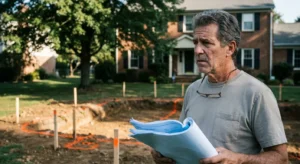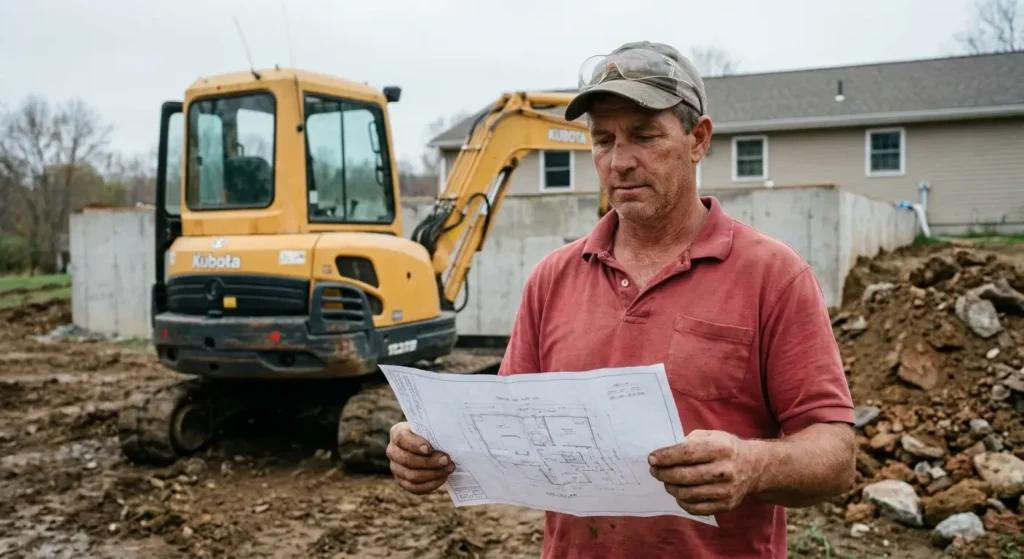
Excavation cost Connecticut homeowners run into is almost never a flat number, and anybody who quotes you one over the phone before seeing the property is guessing. Two lots on the same street can be thousands of dollars apart once the machine actually starts digging. The dirt is different. The access is different. The rock under the grass is different. That is the real reason honest excavation pricing has to happen after somebody walks the site.
This guide breaks down what actually drives the price so you know what you are paying for, what questions to ask, and what to expect when a contractor comes out to give you a free written quote.
Why excavation cost in Connecticut is never one flat number
Excavation is a labor, equipment, and disposal business. Every one of those three buckets shifts with the site. A shallow trench for a water line in soft loam is a completely different job than a full foundation dig into New England ledge. Same machine, same crew, very different day.
What we tell people in Litchfield County is simple. Get somebody on the property. Look at the driveway, the grade, the trees, the utilities, and what is under the topsoil. That thirty minutes of walking the site is what separates a real number from a guess. If you want to see the kind of jobs that shape those numbers, our recent excavation and site work projects page shows what a range of Connecticut digs actually look like.
The real drivers behind excavation cost in Connecticut
Here are the factors that move the price up or down on almost every job we quote.
1. Site access
Can a tracked excavator and a dump truck get to the dig? A wide-open lot with a straight shot from the road is the easiest scenario. Tight side yards, steep driveways, low-hanging wires, mature trees, and soft lawns that need ground protection all add time and equipment. On some jobs we bring in a smaller machine just to fit, which means the dig takes longer. Access is one of the first things a good estimator looks at.
2. Soil type and ledge rock
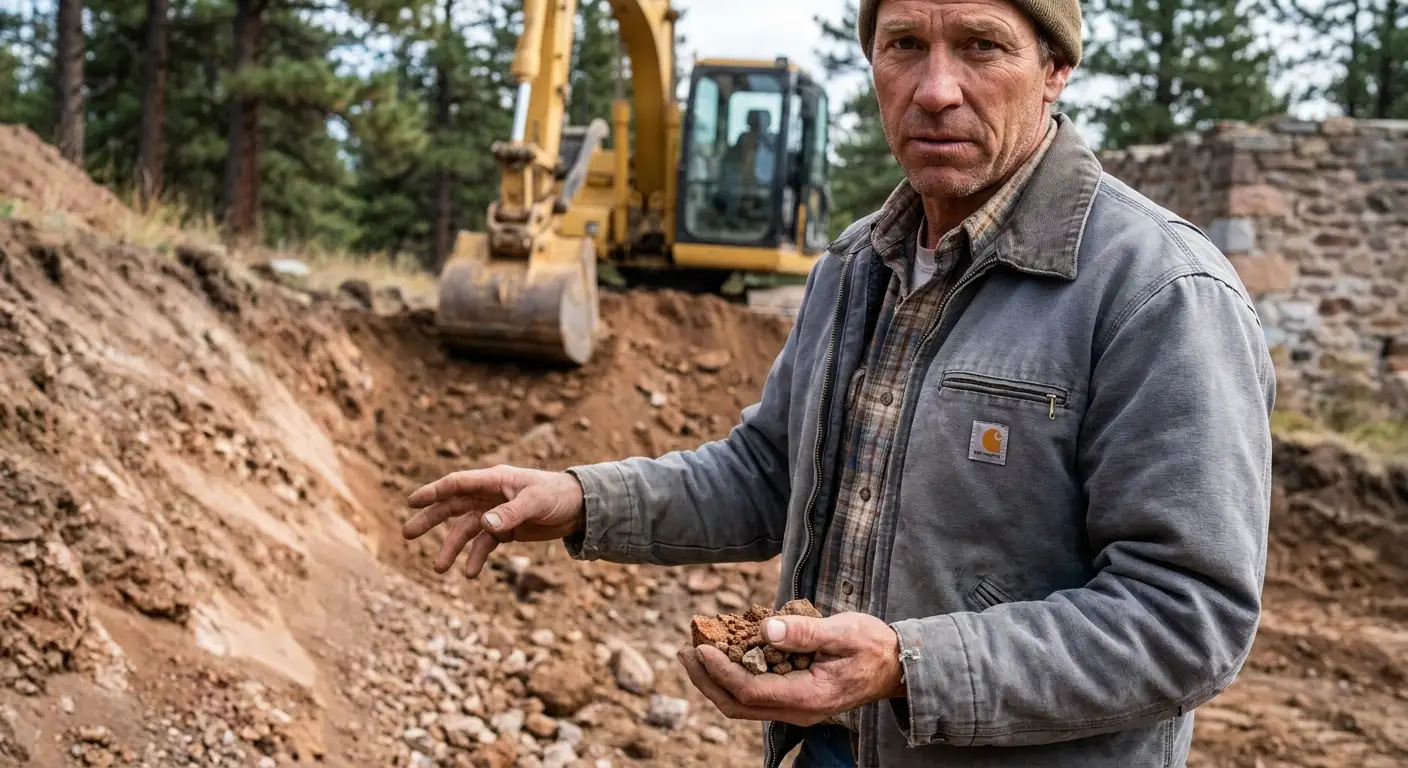
Litchfield County sits on a lot of ledge. Some properties are clean loam and sand two feet down. Others hit gray granite ledge almost immediately. Rock changes everything. It slows the machine, sometimes it means hammering or splitting the ledge, and it changes how much can be dug in a day. Wet clay, high water tables, and running sand also complicate things because the sides of the hole want to cave in. The only way to know what is really under the grass is to look.
3. How much material actually moves
Excavation is really a math problem. Length times width times depth equals a volume of material, and that material has to go somewhere. A four-foot trench for a utility line moves a small amount. A full house foundation moves a lot. Bigger volume means more machine hours, more truckloads, and more disposal, so cubic yards is usually the honest way to think about a job.
4. Haul-off and disposal
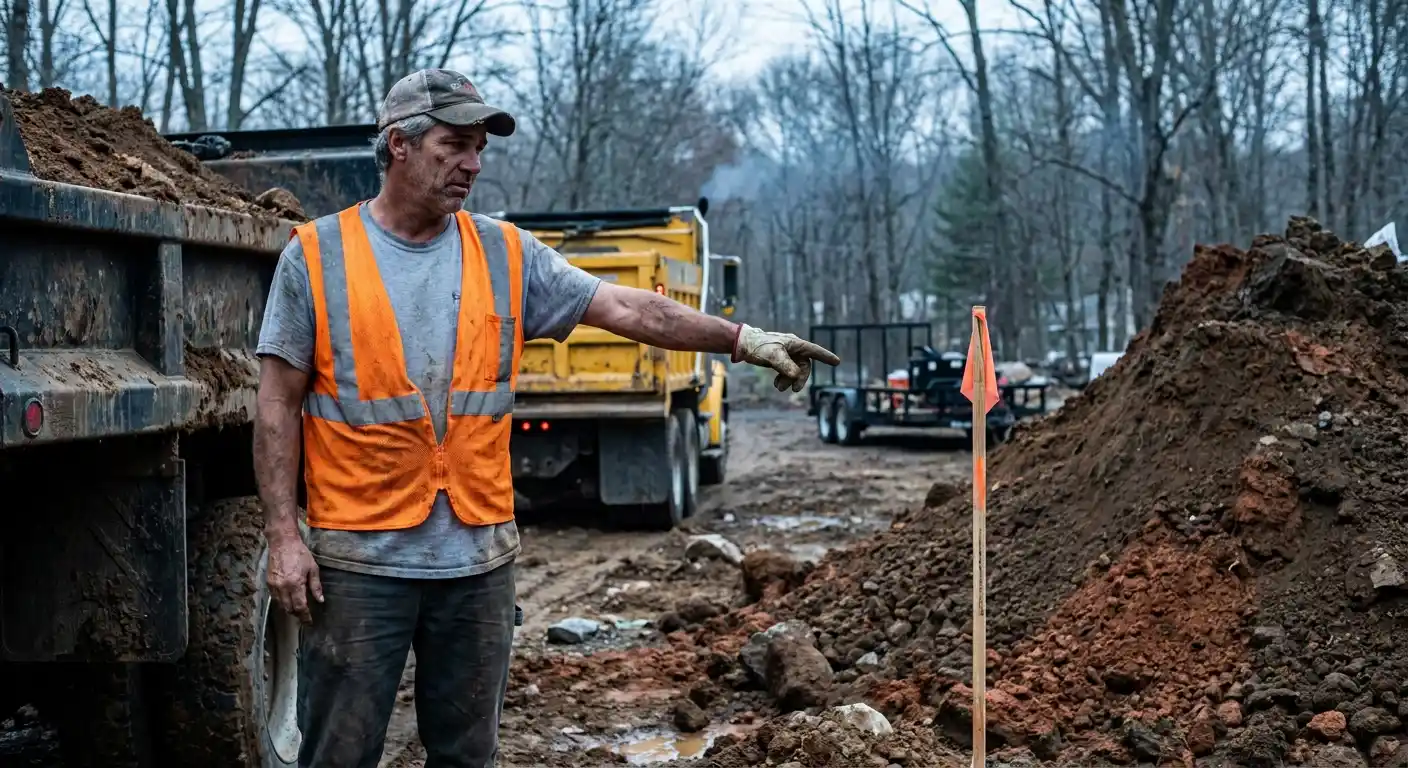
Dirt is heavy and it does not disappear. If the excavated material stays on site as fill or landscaping berms, that is one price. If it has to be trucked off, disposal fees and trucking hours stack up fast. Contaminated material (old fill, buried debris, asphalt) costs even more to get rid of legally. This is a line item that surprises a lot of homeowners, and it is a big reason phone quotes are unreliable.
5. Utilities, permits, and code work
If the excavation is tied to a foundation, an addition, a new driveway, or a utility connection, there are usually permits, inspections, and CT Call Before You Dig requirements. Locating existing utilities, protecting them, or relocating them is real work. So is tying a new footing into an existing structure to code. These are not costs a contractor can skip, and they should be spelled out in your written quote.
6. Drainage and grading
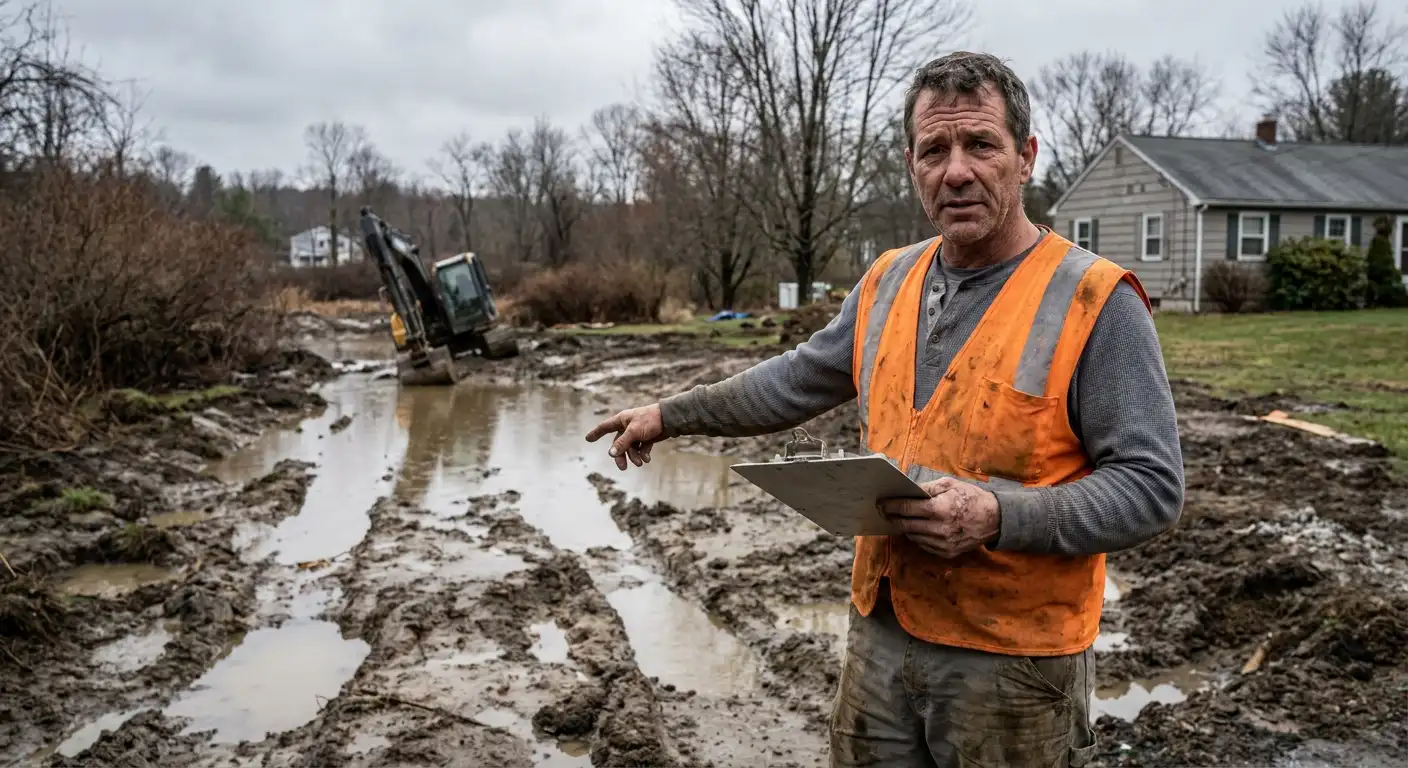
A lot of Connecticut excavation work exists because water is going where it should not. Wet basements, driveway washouts, and settling yards all trace back to drainage. Grading and drainage add scope: French drains, curtain drains, drywells, swales, and re-grading topsoil so water actually leaves the property. It is often the difference between fixing the problem and just moving dirt around.
7. Distance to the site
Windshield time is real. A job forty minutes each way from the yard means the crew and the equipment spend part of the day on the road, and lowbed trucking for the excavator has a cost every time it moves. Local jobs in Litchfield County are more efficient than jobs an hour out, and that shows up in the number.
8. Season and timing
Frozen ground in January is harder to dig than soft ground in May. Spring mud season can shut a site down. Late fall gets tight because everybody wants their work done before winter, so the schedule fills up. Timing does not change the physics of the job, but it can change availability and how efficiently the crew can work.
What a real excavation quote in Connecticut should include
When you get a written excavation quote, it should not be one line that says “excavation, $X.” A real quote spells out the scope so you know what you are getting. According to the Connecticut Department of Consumer Protection, licensed home improvement contractors are required to provide a written contract that clearly describes the work, materials, and price, so this is not just a preference. It is the standard.
Look for these items:
- Scope of work in plain language (what is being dug, how deep, how big)
- How excavated material is being handled (on-site fill vs. haul-off)
- Whether rock, ledge, or unsuitable soil is included or is an allowance
- Site protection (lawn mats, silt fence, tree protection)
- Permits and utility locates
- Restoration (backfill, rough grade, topsoil, seed)
- License and insurance information
If a quote is missing most of that, ask for it in writing before signing anything. It protects you and it protects the contractor.
How Gregory Construction quotes excavation cost in Connecticut
Our crew came up running civil site work for commercial general contractors through the union. That means the standard we hold ourselves to on a residential foundation dig or a driveway drainage job is the same standard a commercial site is held to. Layout, safety, protection of the property, and clean restoration are not extras. They are how the job is supposed to be done.
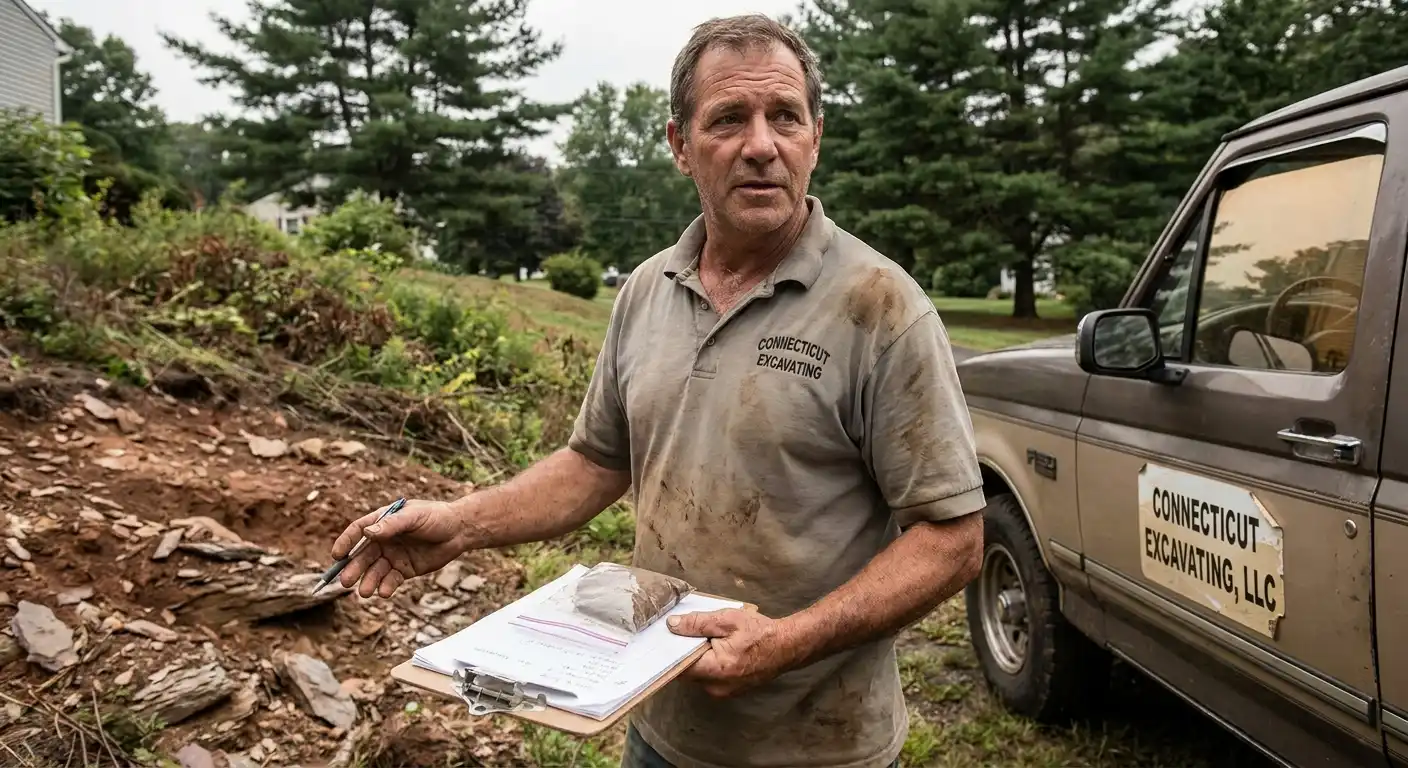
When we come out, Dean walks the site with you. We look at access, grade, soil, ledge, drainage, and where the material is going. Then you get a written quote that spells out the scope. No pressure, no guessing, and no phone-quote surprises later. You can read more about how we work on our about page.
Ready to see a real number
Every property tells a different story once you dig into it. The only honest way to know what your excavation cost in Connecticut is going to look like is to have somebody who does this every day walk the site and put it in writing. That part is free.
Call Dean at (860) 488-4374 or request a free written quote and we will come out, look at the ground, and give you a real number you can plan around.