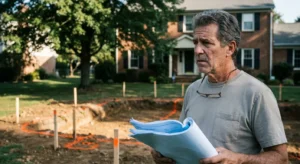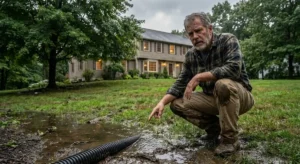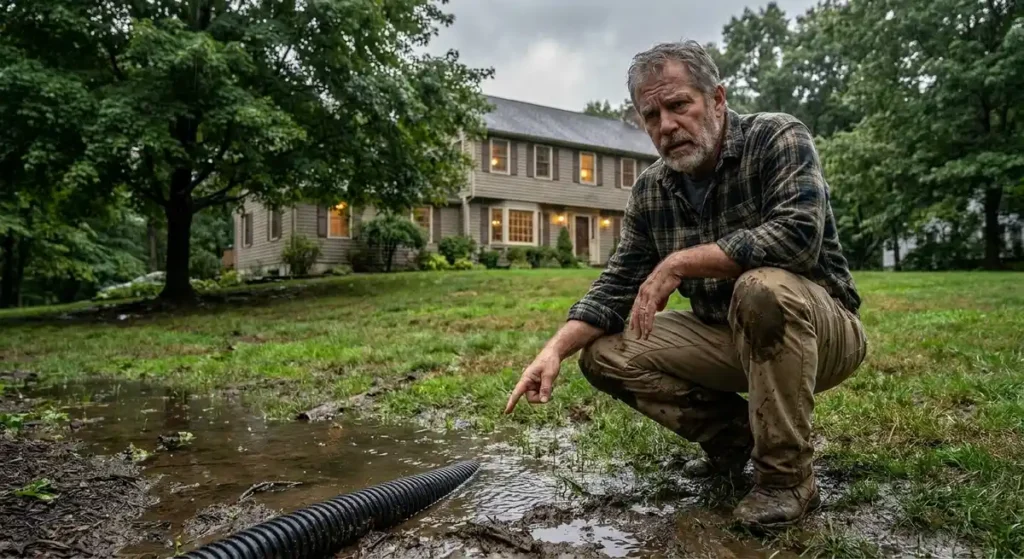
Yard drainage Connecticut homeowners search for after every big rainstorm, because the water shows up in the same spots year after year. If you have a puddle that never leaves, a soggy strip along the foundation, or a basement that smells damp every spring, this guide walks through why it happens and what actually fixes it.
We run excavation and site work across Litchfield County and Fairfield County, so we see the same drainage problems over and over. Most of the time the fix is not complicated. It just has to be done right, and it has to match the actual cause.
Why Yard Drainage in Connecticut Fails So Often
Connecticut soil is not friendly to water. A lot of yards in Torrington, Litchfield, Watertown, and the towns around them sit on heavy clay or glacial till. That soil holds water instead of letting it soak in. Add snow melt in March, a rainy May, and thunderstorms in July, and the ground stays saturated for weeks.
On top of that, most homes were built before anyone thought hard about how water would move across the property twenty or thirty years later. Grading gets flatter as soil settles. Downspouts dump right at the foundation. Old drain tile clogs with silt and roots. The result is standing water where you do not want it.
The Five Most Common Causes of a Flooded Yard
- Bad grade toward the house. The ground should slope away from the foundation at least six inches over the first ten feet. When it slopes toward the house, every rain runs straight at your basement wall.
- Clay or compacted soil. Heavy clay holds water. Compacted soil, often from construction traffic or years of mowing the same paths, does the same thing.
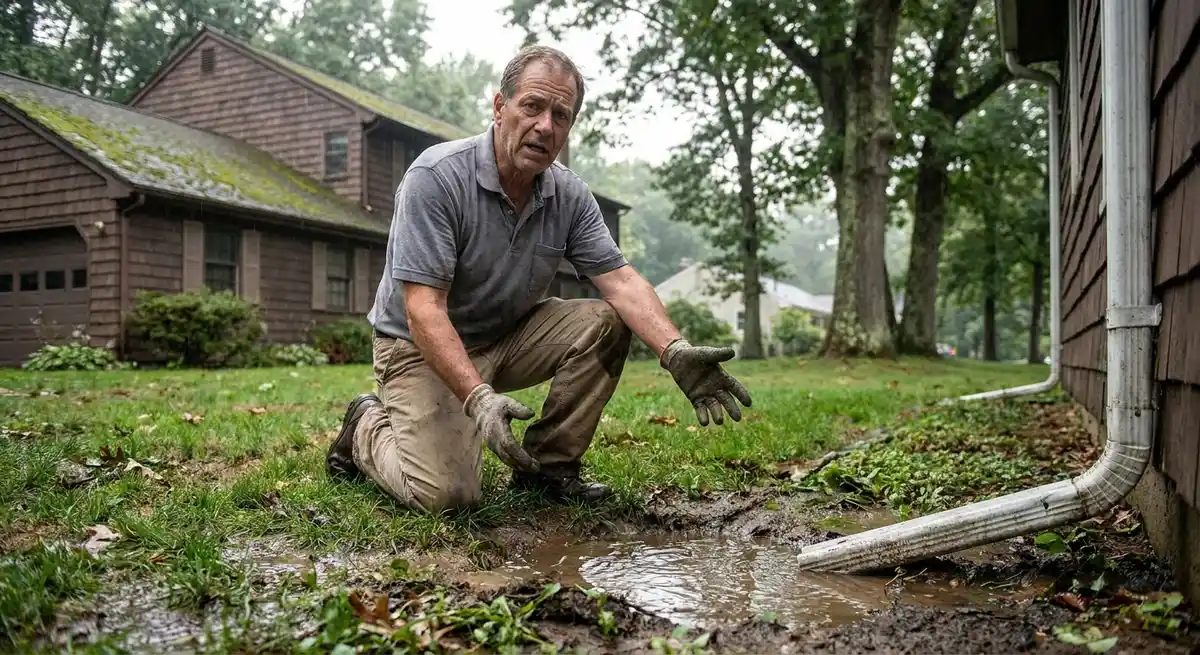
- Downspouts dumping at the foundation. A single downspout can dump hundreds of gallons in one storm right next to the wall.
- High water table. In low-lying spots around Bantam, Morris, and parts of New Milford, the groundwater sits close to the surface. There is nowhere for extra rain to go.
- Failed old drainage. Older French drains and curtain drains clog with silt, roots, and iron ochre. Once they clog, they are worse than nothing.
The Real Fixes for Yard Drainage in Connecticut
The right fix depends on the cause. A lot of homeowners get talked into one solution when they actually need a different one. Here is what each option really does.
Regrading
If the ground slopes wrong, no drain will save you long term. Regrading means bringing in fill, reshaping the soil around the house, and setting a proper slope away from the foundation. This is the first thing to check before spending money on anything else. According to EPA guidance on managing rainwater at home, moving water away from the house before it pools is the single most effective step.
French Drains
A French drain is a gravel-filled trench with a perforated pipe at the bottom. Water in the soil moves into the gravel, then into the pipe, then out to a safe daylight spot or a dry well. Done right, with clean stone and filter fabric, it lasts decades. Done wrong, with the wrong pipe or no fabric, it silts up in a couple of years.
Curtain Drains
A curtain drain is a French drain placed uphill of the house or the wet area. It intercepts water moving through the soil before it gets to your yard. This is the right call when water is coming down a slope from a neighbor’s property or a hillside.
Swales
A swale is a shallow, shaped channel that guides surface water where you want it to go. On larger properties in Goshen, Kent, or Washington, a well-cut swale can move a huge amount of water without any pipe at all.

Dry Wells
A dry well is a buried pit or plastic chamber filled with stone that holds water and lets it soak into the ground slowly. Dry wells are useful when there is nowhere to daylight the drain, but they only work if the surrounding soil actually drains. In heavy clay, a dry well fills up and stays full.
Downspout Extensions
The cheapest, fastest win. Extend every downspout at least six to ten feet away from the foundation, or tie them into a solid pipe that carries water to a safe outlet. Do this before anything else.
Foundation Drainage
If water is getting into the basement, the fix is usually exterior foundation drainage: excavating down to the footing, installing perforated pipe in stone with filter fabric, waterproofing the wall, and backfilling properly. This is a real excavation job, not a weekend project.
Warning Signs Your Yard Drainage Is Failing
Homeowners usually notice the obvious puddle. These are the quieter signs that mean it is time to do something about it.
- A damp or musty basement smell that comes back every spring
- Efflorescence (white powder) on basement walls
- Cracks in the foundation, especially horizontal ones
- Moss growing on the north side of the lawn where it never dries
- Mulch that washes out of the beds after every rain
- Standing water more than 24 hours after a storm
- Water pooling around window wells
- Ice building up on walkways in winter from bad runoff
Any two of these together usually means the problem is bigger than a downspout extension can solve.
When to Call a Pro
You can handle a downspout extension yourself. You can rake mulch back into a bed. Past that, drainage work needs someone who understands how water actually moves on your property and has the equipment to dig it right.
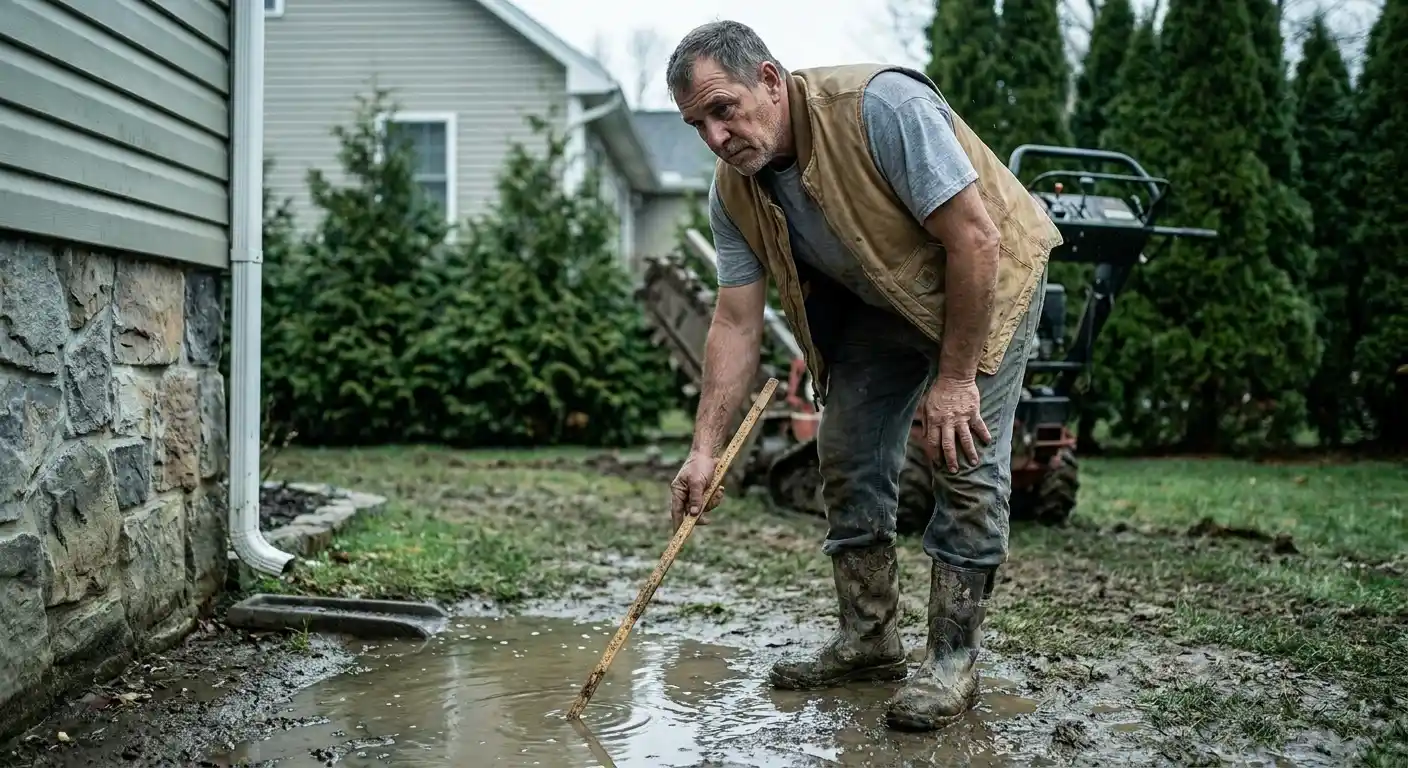
A real drainage fix involves reading the site, checking the grade, finding the outlet, and matching the solution to the soil. Guessing wrong is expensive. We have replaced a lot of DIY French drains that clogged in two seasons because they were built without filter fabric, or with the wrong stone, or with no outlet at all.
If water is getting into the house, or the same low spot floods every storm, or the grade around the foundation is wrong, that is the point to call. Waiting a year usually means paying to fix the drainage and paying to fix whatever the water damaged.
How Gregory Construction Handles Drainage and Grading
Our crew came up running civil site work for commercial contractors through the union. That is the standard we hold every residential job to. When we look at a wet yard, we are reading the whole property: where the water is coming from, where it can safely go, what the soil will do, and what the grade needs to be.
Every drainage job we do is quoted after we walk the site. There are no cookie-cutter prices because there are no cookie-cutter yards. We handle everything from a single curtain drain to full site regrading and foundation drainage, and we stand behind the work.
You can see examples of the kind of site work we do on our recent excavation and drainage projects page.
Get a Free Quote on Your Yard Drainage
If your yard floods every spring, or you have standing water that will not go away, get a real set of eyes on it. Dean walks every job before we quote, and the quote is free.
Call (860) 488-4374 or request a free quote here. We cover Litchfield County and Fairfield County, licensed CT HIC 0703088 and insured to $2M, locally owned since 2020.